
Glaucoma treatment in Monterrey
We detect glaucoma early and control it with drops, laser or surgery to protect your optic nerve and preserve your vision.
Evaluations in San Pedro Garza García (Río de la Plata 113, Col. Del Valle), minutes from Monterrey.

What is glaucoma?
Glaucoma is a disease that slowly damages the optic nerve, the cable that carries images from the eye to the brain. It is usually related to high pressure inside the eye.
At first it causes no pain or symptoms: side vision is lost first and, without treatment, the loss moves toward the center. Lost vision does not come back, so early detection is key.
It is more common after age 40 and in people with a family history of glaucoma, diabetes, high myopia, long-term steroid use or previous eye injuries.
How does a person with glaucoma see?
Drag the line: on the left, normal vision; on the right, the tunnel vision of advanced glaucoma.
 Normal vision
Glaucoma symptoms
The most common glaucoma causes no discomfort: an eye exam is the only way to detect it. Acute glaucoma, on the other hand, is an emergency.
No early symptoms
It progresses silently for years.
Loss of side vision
You bump into things or miss what is beside you.
Tunnel vision
In advanced stages only the center remains.
Severe pain and red eye
A sign of acute glaucoma: seek care right away.
Blurred vision with halos
Colored rings around lights.
Headache and nausea
They may come with an acute attack.
How we diagnose and treat glaucoma
The goal is to lower eye pressure to stop optic nerve damage.
Complete diagnosis
We measure eye pressure and study the optic nerve with OCT, visual field testing and gonioscopy to know the type and stage of glaucoma.
Eye drops
They are the first treatment in most cases. They lower eye pressure and are used every day.
Laser
Selective laser trabeculoplasty (SLT) improves drainage; laser iridotomy opens the way for fluid in angle-closure glaucoma.
Surgery
If drops and laser are not enough, surgery creates a new drainage path to control the pressure.
Glaucoma is controlled, not cured: regular check-ups are part of the treatment.
Types of glaucoma
Knowing your type of glaucoma defines the treatment.
Open-angle
The eye's drainage works less and less. It progresses slowly and without symptoms for years.
Angle-closure
The iris blocks drainage. It can cause an acute attack with pain, red eye and blurred vision.
Normal-tension, congenital and secondary
Nerve damage with normal pressure, glaucoma in babies, or glaucoma caused by steroids, diabetes, inflammation or injuries.
At your evaluation we identify your type of glaucoma and propose the most suitable treatment.
Can it be prevented?
Vision loss from glaucoma can be prevented with early diagnosis. Have your eye pressure and optic nerve checked every year from age 40, or earlier if you have a family history of glaucoma, diabetes or high myopia. If you already have glaucoma, use your drops every day and keep your follow-up visits.
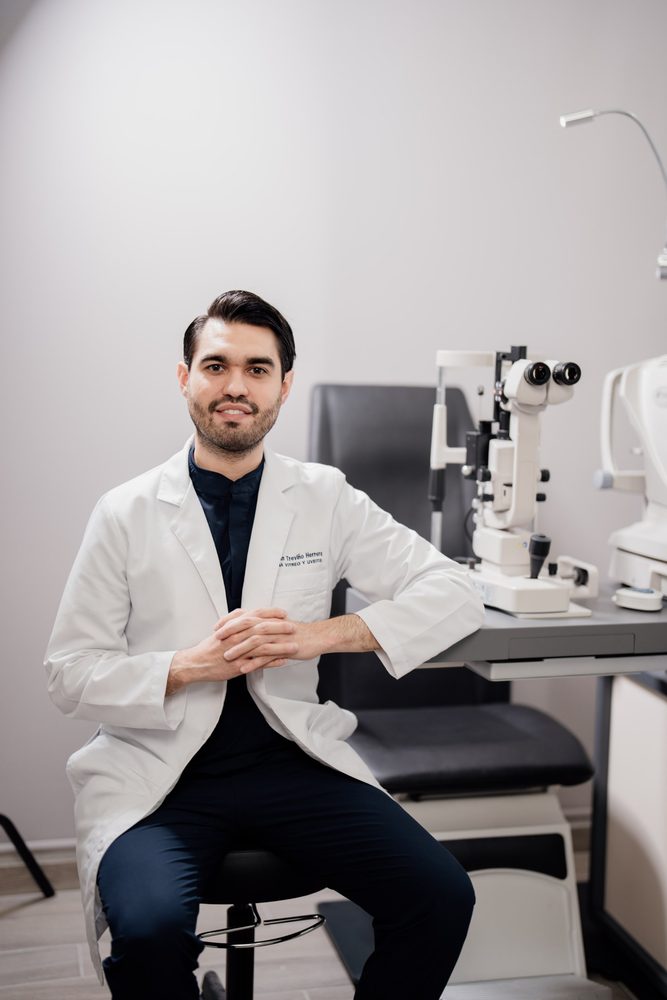
Why Dr. Alan Treviño?
As an ophthalmologist and retina specialist, Dr. Alan Treviño evaluates your optic nerve with imaging tests and closely follows your eye pressure to protect your vision in the long term.
- Board-certified by the Mexican Board of Ophthalmology (No. 4209).
- Fellowship in Medical and Surgical Retina at LV Prasad Eye Institute (India).
- Fellowship in Ocular Inflammatory Diseases and Uveitis (APEC, UNAM).
- Clinical rotation in Cornea and Retina at Bascom Palmer Eye Institute (University of Miami).
- Member of Mexico's National System of Researchers.
Frequently asked questions
Can glaucoma be cured?
No, but it can be controlled. Drops, laser or surgery lower eye pressure and stop or slow optic nerve damage.
Will I go blind?
Most patients who are diagnosed early and follow their treatment keep useful vision for life.
How often should I get checked?
Once a year from age 40, or earlier if you have risk factors. If you already have glaucoma, as often as your ophthalmologist recommends, usually every 3 to 6 months.
Are the drops for life?
In most cases, yes. Do not stop them even if you feel fine, because glaucoma causes no symptoms.
Is glaucoma hereditary?
Having parents or siblings with glaucoma increases your risk. If that is your case, get checked even if you see well.
How much does glaucoma treatment cost?
It depends on the type of glaucoma, the tests you need and whether treatment is with drops, laser or surgery. At your evaluation we give you a personalized quote.
Do you accept private health insurance?
Yes. We see patients with private health insurance from the main insurers. Coverage depends on your policy; we guide you through the paperwork.
We accept private health insurance
Coverage depends on your policy. We guide you and help with the paperwork. See all insurers →


You may also be interested in
BOOK YOUR CONSULTATION
San Pedro Garza García: Monday to Thursday, 9 am to 6 pm, and Saturday, 9 am to 2 pm.
Sabinas Hidalgo (Punto Visión): Fridays, 9 am to 6 pm. English spoken.

VISIT US AT ANY OF OUR CLINICS

San Pedro Garza García
Centro Interamericano de Alta Especialidad en Oftalmología
Río de la Plata 113, Col. Del Valle,
66220 San Pedro Garza García, Nuevo León, Mexico.
Monday to Thursday: 9 am to 6 pm
Saturday: 9 am to 2 pm

Sabinas Hidalgo
Punto Visión · Porfirio Díaz 507, Downtown,
65200 Sabinas Hidalgo, Nuevo León, Mexico.
Fridays, 9 am to 6 pm.
CONTACT US