
Ocular toxoplasmosis in Monterrey
The most common infectious cause of inflammation in the retina. It shows up as a white spot next to an old scar and is treated with medicines against the parasite.
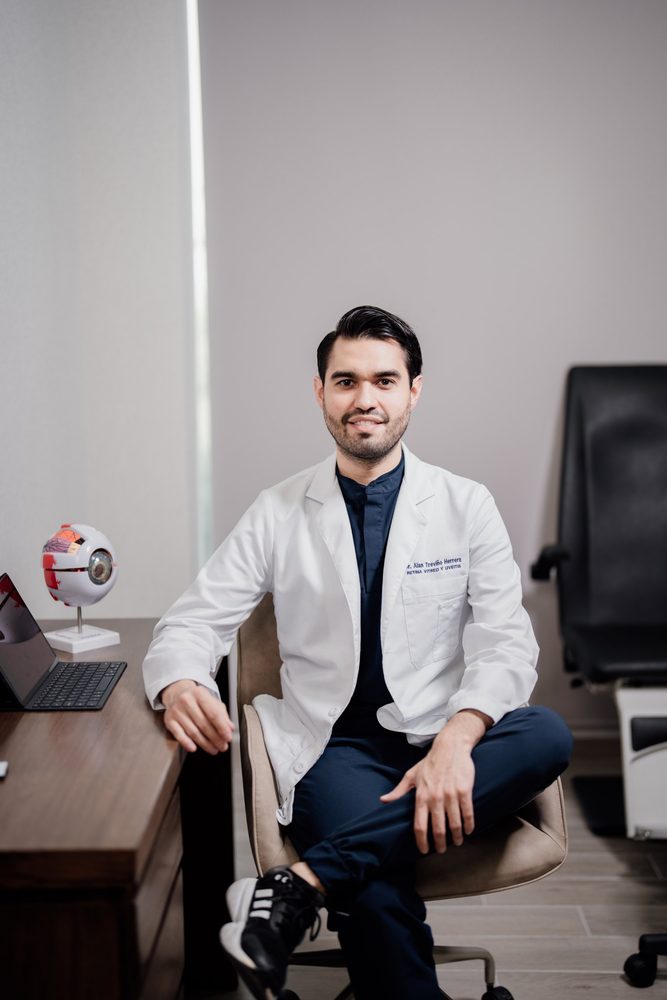
Reviewed by Dr. Alan Treviño, board-certified ophthalmologist with fellowship training in retina and uveitis · Updated: November 2026
Evaluations in San Pedro Garza García (Río de la Plata 113, Col. Del Valle), minutes from Monterrey.
Ocular toxoplasmosis is an infection of the retina caused by the parasite Toxoplasma gondii. It causes floaters and blurry vision, sometimes with a red eye. It is diagnosed by seeing an area of inflammation in the retina, often next to a scar from a previous episode, and confirmed with blood tests if needed. It is treated with specific antibiotics, sometimes with a steroid. Not every lesion needs treatment; it depends on its size and how close it is to the center of vision.
What is ocular toxoplasmosis?
Toxoplasma is a parasite caught from undercooked meat, poorly washed vegetables or contact with cat feces. It can also pass from mother to baby during pregnancy.
In the eye it forms a focus of retinochoroiditis: an inflamed area of retina that leaves a scar when it heals. The parasite can stay dormant in that scar and reactivate years later.
- The most common infectious cause of posterior uveitis.
- Usually affects one eye.
- Reactivations appear next to old scars.
- Seen directly during a dilated eye exam.
Symptoms
Floaters
Many, appearing recently.
Blurry vision
From inflammation in the vitreous.
Red eye or pain
In some cases.
A spot in your vision
If the lesion is near the center.
If you have had ocular toxoplasmosis and floaters or blurry vision come back, message us soon: it may be a reactivation.
How is it treated?
Anti-parasite antibiotics
Tablets for several weeks, chosen according to your case, allergies and pregnancy.
Steroid
Added after starting antibiotics to reduce inflammation. Never on its own.
Injection in the eye
An option in some cases, for example if tablets are not tolerated.
Observation
Small lesions far from the center may heal on their own with follow-up.
Lesions near the macula or optic nerve, or in people with a weak immune system, are always treated. OCT follow-up confirms the lesion is scarring.
How to lower your risk
Well-cooked meat
No pink parts.
Washed fruit and vegetables
Especially those eaten raw.
Safe water
Boiled or purified.
Careful with the litter box
Gloves and hand washing; in pregnancy, have someone else clean it.
Questions about ocular toxoplasmosis
Is it contagious between people?
Can it come back?
Will I lose my sight?
Can I use leftover steroid drops?
What if I am pregnant?
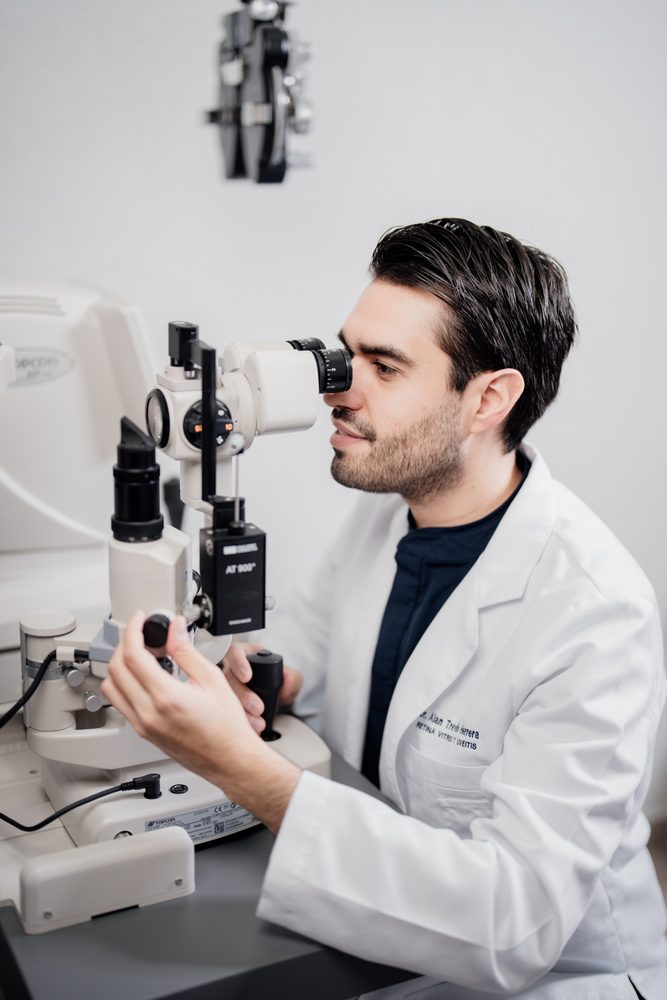
Why Dr. Alan Treviño?
With subspecialty training in both uveitis and retina, Dr. Alan Treviño treats the inflammation and its retinal complications. Consultations are available in English.
- Board-certified by the Mexican Board of Ophthalmology (No. 4209).
- Fellowship in Medical and Surgical Retina at LV Prasad Eye Institute (India).
- Fellowship in Ocular Inflammatory Diseases and Uveitis (APEC, UNAM).
- Clinical rotation in Cornea and Retina at Bascom Palmer Eye Institute (University of Miami).
- Member of Mexico's National System of Researchers.
We accept private health insurance
Coverage depends on your policy. We guide you and help with the paperwork. See all insurers →


You may also be interested in
BOOK YOUR CONSULTATION
San Pedro Garza García: Monday to Thursday, 9 am to 6 pm, and Saturday, 9 am to 2 pm.
Sabinas Hidalgo (Punto Visión): Fridays, 9 am to 6 pm. English spoken.

VISIT US AT ANY OF OUR CLINICS
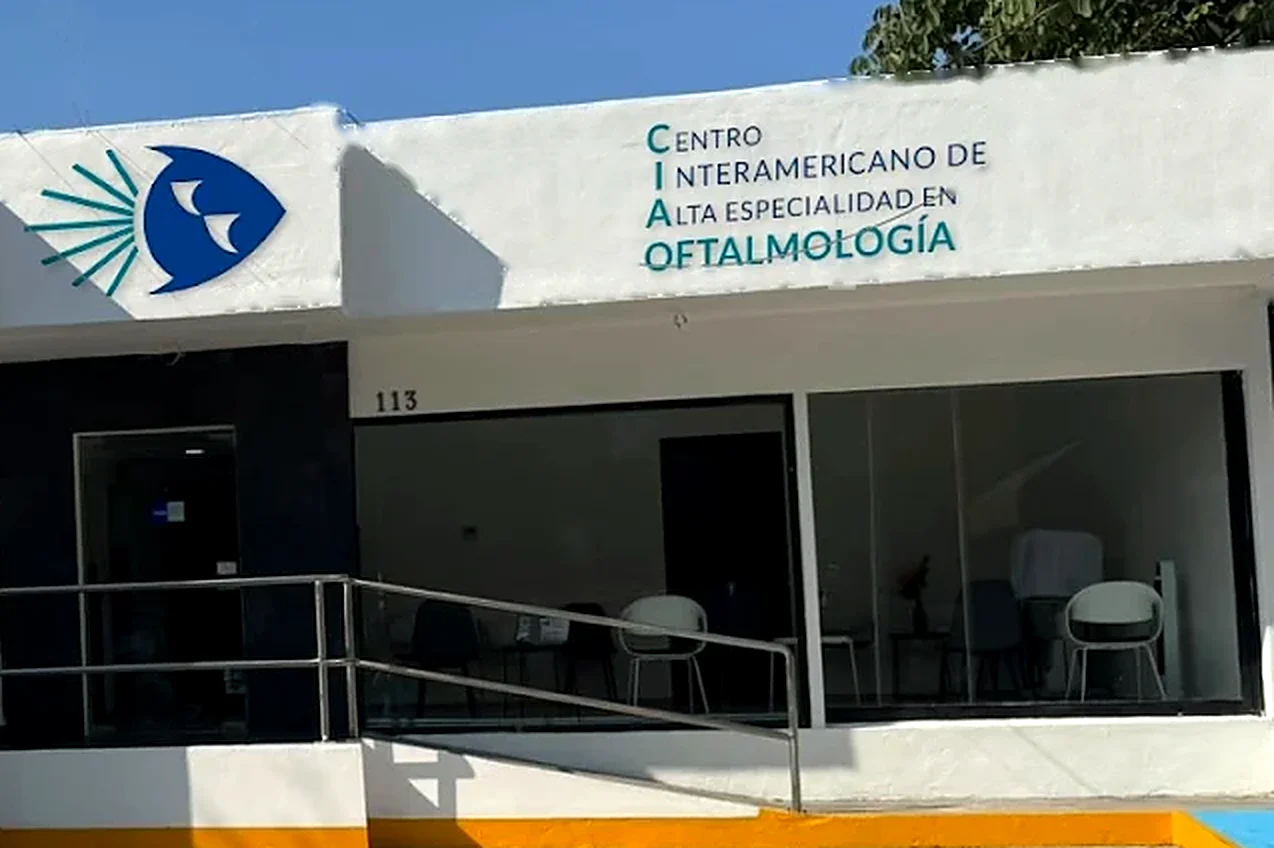
San Pedro Garza García
Centro Interamericano de Alta Especialidad en Oftalmología
Río de la Plata 113, Col. Del Valle,
66220 San Pedro Garza García, Nuevo León, Mexico.
Monday to Thursday: 9 am to 6 pm
Saturday: 9 am to 2 pm

Sabinas Hidalgo
Punto Visión · Porfirio Díaz 507, Downtown,
65200 Sabinas Hidalgo, Nuevo León, Mexico.
Fridays, 9 am to 6 pm.
CONTACT US